CEMENT EVALUATION LOG INTERPRETATION
Cement Evaluation Through a Cementing Engineering Perspective
Cementing Performance provides independent, detailed and decision-focused cement evaluation log interpretation services for oil and gas operators.
Our approach combines cement evaluation expertise with a cementing engineering background to understand not only what the log is showing, but why the cement may be responding that way.
This perspective helps operators assess cement bond conditions and zonal isolation, and supports decisions on cement barrier verification, well integrity, remediation and P&A. It also helps evaluate the effectiveness of cementing improvements already implemented and identify opportunities to improve future cementing design, execution or new technology deployment.
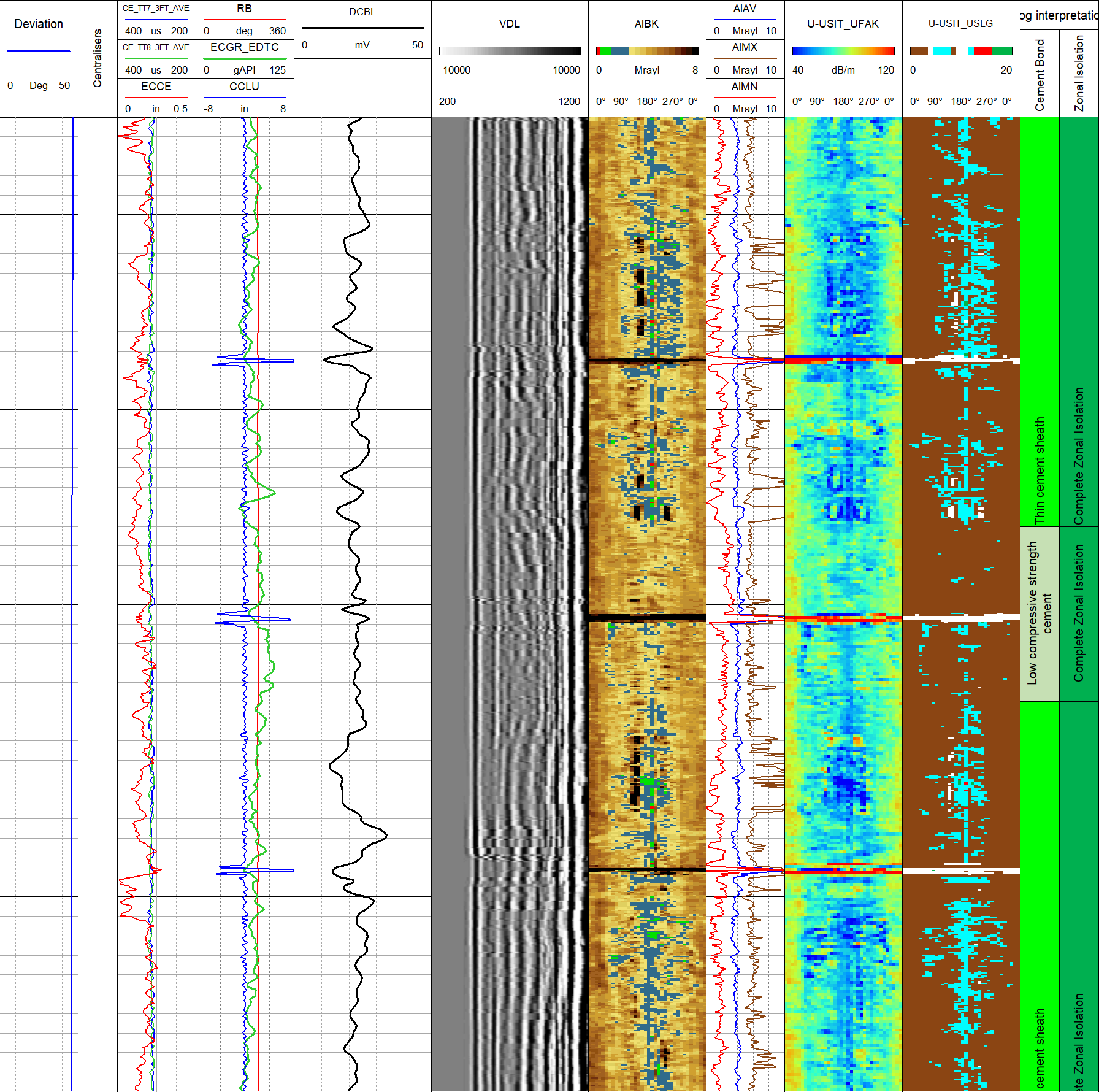
A Structured and Independent Interpretation Process
The interpretation combines structured workflows, correlation between available data sources and proprietary analytical methods to reduce ambiguity and improve consistency.
The analysis integrates well and casing information, cementing design and execution, lithology, relevant information from offset wells and correlations between sonic and ultrasonic responses where available.
A Diagnostic Approach to Cement Evaluation
A structured workflow connecting data reliability, cement bond conditions and zonal isolation diagnosis.
Data Quality Control
Confirm that the acquired data are reliable and interpretable before conclusions are drawn.
Cement Bond Conditions
Identify the cement bond conditions reflected in the available log data.
03 — Zonal Isolation Diagnosis
Integrate the log response with cementing information to assess zonal isolation.
It’s not about interpreting based on predefined thresholds. It’s about understanding what the complete log response suggests.
Cement Evaluation Logs We Interpret
Cementing Performance provides independent interpretation of cement evaluation logs from different logging service companies and tool manufacturers. The scope includes both recently acquired logs for current operational decisions and legacy data used for offset wells analysis, drilling planning and P&A activities.
- Sonic cement evaluation logs: Cement Bond Log (CBL), Cement Bond Tool (CBT), Sonic Scanner™ and Slim Cement Mapping Tool (SCMT™).
- Acoustic waveform logs: Variable Density Log (VDL™), microseismogram (MSG) and Segmented Bond Tool (SBT™) wave.
- Radial and segmented bond logs: Radial bond tools and the Segmented Bond Tool (SBT™).
- Ultrasonic cement evaluation logs: Pulse echo and circumferential ultrasonic technologies, including Ultrasonic Imaging Tool (USIT™), CAST™ and Ultrasonic Radial Scanner (URS).
- Flexural attenuation logs: Isolation Scanner™ and Integrity eXplorer™.
- New generation cement evaluation technologies.
Sonic Scanner™, SCMT™, VDL™, USIT™ and Isolation Scanner™ are trademarks of SLB. CAST™ is a trademark of Halliburton. SBT™ and Integrity eXplorer™ are trademarks of Baker Hughes. Other product names are used for identification purposes and remain the property of their respective owners.
The Questions Our Interpretation Is Designed to Answer
What is the cement bond condition?
Why does the cement have this bonding condition?
Is there zonal isolation?
Do I need to remediate?
Can I remediate?
What can be improved in the next cementing operation?
Rather than stopping at a description of the log response, the interpretation is designed to support the next engineering or operational decision, whether that involves barrier acceptance, additional evaluation, remediation, or adjustment of the P&A plan.
Related technical insight: Microannulus and Cement Evaluation
Rapid Operational Decisions and Reporting
Cement evaluation conclusions are often needed quickly to confirm the next well operation. Cementing Performance helps turn acquired log data into timely, technically supported conclusions that can reduce decision delays and avoid unnecessary rig time and associated costs.
Real-Time Interpretation
Remote or onsite interpretation can be provided during logging operations to support immediate decisions on log quality, barrier condition, whether additional logging is required, and the appropriate next steps.
Quick-View Report
A concise report highlighting the key findings, zonal isolation conclusions and relevant recommendations can typically be provided within the first minutes after the log information is received, supporting immediate operational decisions.
Detailed Technical Report
A detailed technical report follows the initial quick-view interpretation, providing the analysis and supporting evidence behind the conclusions and recommendations.
It provides a permanent record for well documentation, internal review and communication with relevant stakeholders.
From Cement Evaluation to Acceptance and Remediation
The objective of cement evaluation is to establish the clearest possible technically supported outcome from the available evidence and provide practical recommendations for the next step.
Cementing objectives achieved
When the evaluation confirms that the objectives of the cementing operation have been achieved, the operator receives the technical basis and documentation required to support that conclusion.
Remediation required
When remediation is required, the same combination of cementing engineering and cement evaluation expertise can support the planning, design, execution and evaluation of the remedial cementing operation.
Frequently Asked Questions
Can Cementing Performance interpret logs from any logging service company or tool manufacturer?
Yes. Cementing Performance provides independent cement evaluation log interpretation regardless of the logging service company or tool manufacturer. The interpretation focuses on data quality, well information and cementing input rather than relying solely on predefined thresholds for cement evaluation.
What types of cement evaluation logs can Cementing Performance interpret?
Cementing Performance interprets a wide range of sonic, acoustic waveform, radial, segmented, ultrasonic pulse echo, flexural attenuation and new generation cement evaluation logs. This includes technologies such as CBL, VDL™, CBT, Sonic Scanner™, SCMT™, SBT™, USIT™, CAST™, URS, Isolation Scanner™ and Integrity eXplorer™.
Sonic Scanner™, SCMT™, VDL™, USIT™ and Isolation Scanner™ are trademarks of SLB. CAST™ is a trademark of Halliburton. SBT™ and Integrity eXplorer™ are trademarks of Baker Hughes. Other product names are used for identification purposes and remain the property of their respective owners.
Can Cementing Performance provide real-time cement evaluation interpretation during logging operations?
Yes. Remote or onsite real-time interpretation can be provided during logging operations to support decisions on data quality, cement barrier condition, whether additional logging is required and the appropriate next operational step. This helps operators minimise unnecessary rig time associated with waiting for decisions based on cement bond log information.
How quickly can a cement evaluation report be delivered?
A quick-view interpretation with the key findings, zonal isolation conclusions and relevant recommendations can typically be provided within the first minutes after the log information is received. A detailed technical report follows with the supporting analysis, evidence and documentation.
Can Cementing Performance review legacy cement evaluation logs?
Yes. Legacy cement evaluation logs can be reviewed to reassess previous interpretations and provide input for future drilling and P&A campaigns.
Can the same advisor support both cement evaluation and remedial cementing planning?
Yes. When cement evaluation indicates that remediation is required, the same cementing engineering and cement evaluation expertise can support the planning, design, execution and subsequent evaluation of the remedial cementing operation.
What decisions can cement evaluation support?
Cement evaluation can support decisions on cement barrier verification, zonal isolation, additional logging, remedial cementing and P&A planning. It can also help determine whether the objectives of the original cementing operation were achieved and identify improvements for future cementing operations.